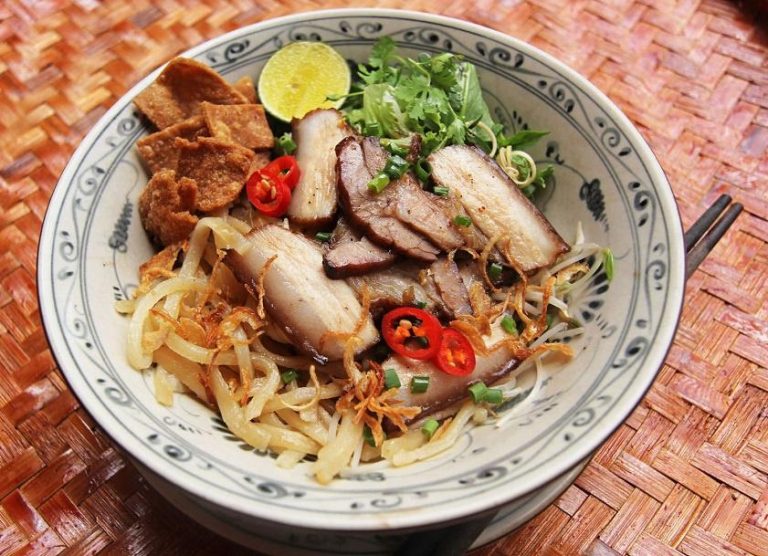
🌟 Have You Ever Wondered How Vietnamese Noodles Are Made?
• You may have already enjoyed a bowl of Pho, Mi Quang, Bun Bo Hue, or Bun Dau Mam Tom during your trip to Vietnam.
• But have you ever wondered how these fresh noodles are actually made?
• Unlike dried noodles sold in supermarkets, traditional Vietnamese noodles are made fresh every single day by local artisans.
• While most people are still asleep, noodle makers wake up as early as 3:00 AM to begin their work.
• From soaking rice and grinding it into batter to steaming, pressing, and cutting noodles, everything must be completed before sunrise.
• The fresh noodles are then delivered to local restaurants, street food vendors, and markets in time for breakfast service.
• These noodles are designed to be enjoyed on the same day they are made. By the next day, natural fermentation begins, causing the noodles to become sour and lose their best texture and flavor.
• Join MyDaNangStay as we explore the fascinating journey from simple rice grains to the fresh noodles that have become symbols of Vietnamese cuisine.
🌾 Step 1: Soaking and Grinding the Rice
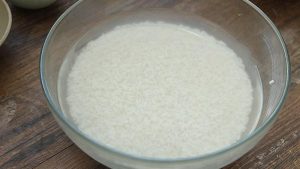
• The process begins with rice grains being soaked in water for several hours until they become soft.
• The softened rice is then ground into a smooth rice batter.
• This rice batter becomes the foundation for many of Vietnam’s most beloved noodle dishes.
🍜 Bún (Rice Vermicelli)
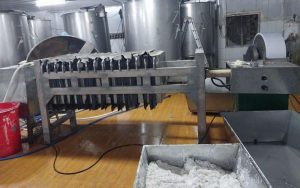
• For bún, the rice batter is pressed directly through a machine to create long, thin noodle strands.
• The noodles are immediately cooked in hot water, cooled, and prepared for sale.
Production Process
Rice → Soak → Grind → Press into Strands → Cook → Fresh Bún
Characteristics
• Thin and round noodles.
• Soft and light texture.
• Commonly used in dishes such as:
- Bun Bo Hue
- Bun Cha
- Bun Thit Nuong
🍜 Phở (Pho Noodles)
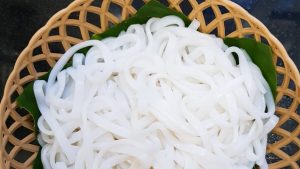
• For pho noodles, the rice batter is not pressed directly into strands.
• Instead, it is steamed into large thin sheets.
• After cooling, the sheets are cut into flat noodle strips.
Production Process
Rice → Soak → Grind → Steam into Sheets → Cut into Strips → Fresh Pho
Characteristics
• Flat and silky texture.
• Softer than bún.
• Designed to absorb the rich broth that makes Vietnamese pho famous worldwide.
🍜 Mì Quảng (Quang-Style Noodles)
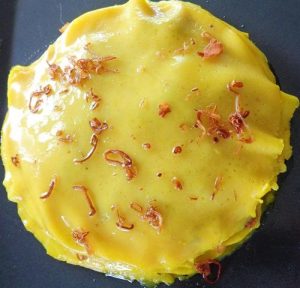
• Mi Quang noodles are also made from rice.
• However, the noodle sheets are thicker than pho sheets.
• They are cut into wider strips and are often colored yellow using turmeric.
Production Process
Rice → Soak → Grind → Steam Thick Sheets → Cut into Wide Strips → Mi Quang
Characteristics
• Thicker and chewier than pho noodles.
• Usually served with only a small amount of broth.
• The noodles and toppings are the stars of the dish.
One Grain of Rice, Many Culinary Traditions
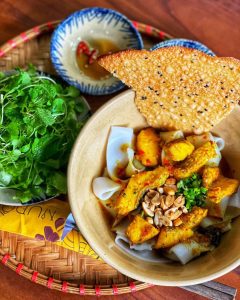
• One of the most remarkable aspects of Vietnamese cuisine is how a single grain of rice can be transformed into many different types of noodles.
• Each variety has its own texture, flavor, and cultural story.
• Together, they represent the rich diversity of Vietnamese food from North to South.
• Behind every bowl of steaming pho, every flavorful plate of Mi Quang, and every delicious bowl of bún are dedicated artisans who began their work long before dawn.
• This is part of what makes Vietnamese cuisine so special: fresh ingredients, traditional craftsmanship, and flavors that have been passed down through generations.